Why You Should Keep a Spare Kubota Digger Key Handy
The Real Cost of a Lost Digger Key
If you run a Kubota mini digger on a UK construction site or a small landscaping job, you already know how a single lost key can stop an entire day's work. I have seen it happen more times than I can count. A machine sits idle, the operator is frustrated, and the hire company is losing money by the hour. The problem is not just the inconvenience. It is the fact that many Kubota excavator keys are not simple pieces of metal you can duplicate at a high street shop. They contain transponder chips that communicate with the machine's security system. Lose that key, and you are looking at a wait for a programmed replacement, unless you already have a spare Kubota digger key in the toolbox.
Over the past decade, I have worked with dozens of plant operators and small contractors across the UK. The ones who never get caught out are the ones who treat key management as part of their equipment maintenance. They keep a spare Kubota digger key in a secure place, often in the cab or with the site manager. It sounds obvious, but you would be amazed how many people assume it will never happen to them. Until it does.
What Makes a Kubota Mini Digger Key Different
A standard machine key for older construction equipment might be a straightforward blade that turns a mechanical lock. But modern Kubota mini diggers, especially the KX series and the popular Terracotta models, use an electronic key system. The key contains a microchip that talks to the machine's controller. Without the correct chip, the excavator will not start, even if the metal part fits the lock. This is a deliberate security measure to prevent theft and unauthorised use, but it also means that a lost key is not something you can fix with a quick trip to a key cutting kiosk.
Kubota Keys, a UK specialist that has been providing replacement keys and key programming since 2010, handles this exact situation every day. They carry pre-cut blanks for most common models, including the Kubota U10, Kubota U15, Kubota U17, Kubota U25, Kubota U27, and Kubota U35. The key cutting process itself is straightforward for a professional. The tricky part is the key programming, which requires equipment that reads and writes the transponder data. Without that service, a blank key is useless.
Models That Share the Same Key System
Not every Kubota mini digger uses a unique key. Many of the smaller machines, like the Kubota U10 and U15, share the same key profile. That means if you run a mixed fleet of older models, one spare Kubota digger key might cover several machines. The U17 and U25 also use a similar system, though the chip programming can differ depending on the year of manufacture. The Kubota KX range, being more recent, often has a different transponder protocol. It is always worth checking the part number on your existing key before ordering a replacement.
Here is a quick reference for the most common Kubota mini digger models and their key compatibility:
- Kubota U10 and U15 - Same key blank, similar chip programming.
- Kubota U17 and U25 - Same key blank, but chip programming may vary by year.
- Kubota U27 and U35 - Larger machines, often use a different key blank.
- Kubota KX series - Latest generation, separate key profile and chip.
- Terracotta models - Same system as the U-range, but verify the chip version.
If you are unsure which key you need, a reputable supplier like Kubota Keys can guide you based on your machine's serial number. They also keep records of common programming codes, so you do not have to send your machine to a dealer just to get a key cut.
Key Programming vs Key Cutting
There is a common misunderstanding among plant operators that key programming is the same as key cutting. It is not. Key cutting is the physical shaping of the metal blade to match the lock. Key programming is the electronic step where the transponder chip is told to communicate with a specific machine or family of machines. Some replacement keys come pre-programmed for a whole range, like the ICO-compatible keys that work across multiple Kubota models. Others must be programmed to a single machine's unique code.
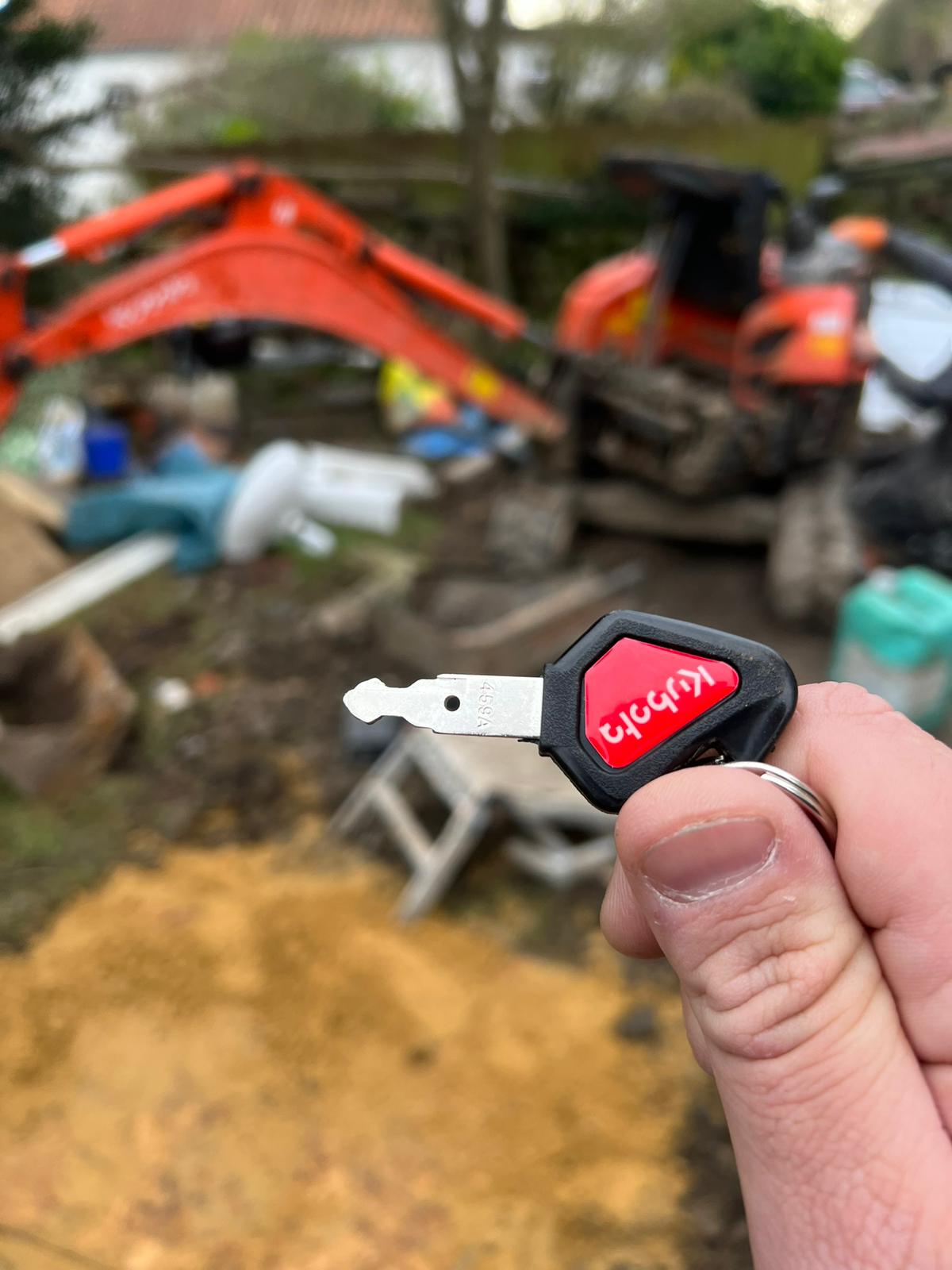
When you order a replacement key by post, a good supplier will ask for your machine's identification number or the code from your existing key. They will then cut and program the key before sending it out. That is the value of a specialist postal service: you get a fully working key in the post, not a blank that still needs work. The turnaround time is often a day or two, which is far faster than waiting for a dealer appointment. But you still have to factor in the postage time, which is why having a spare Kubota digger key already in your possession is the safer option.
Practical Advice for Keeping a Spare
I recommend every operator who runs a Kubota mini digger, whether owned or hired, to keep a spare key in a designated location that is not on the same key ring as the main key. If you lose the main key, you still have the spare. Here are a few practical tips based on what I have seen work on real sites:
- Keep the spare in the machine's lockable toolbox, not in the cab where it can be seen from outside.
- If you run a hire fleet, have a master set of programmed keys for each model, stored in the office.
- Engrave a code on the spare key that does not reveal the machine model, so if it is stolen, it cannot be used to identify your equipment.
- Test the spare key once a month to make sure the chip has not failed. Electronic keys can degrade over time.
- When you sell a machine, always remove any spare keys you have. The new owner should order their own replacement keys.
These steps take minimal effort but can save hours of downtime and the cost of an emergency key programming callout. I have seen contractors lose a full day's hire rate because they had no spare and the nearest specialist was a two-hour drive away. A spare key costs a fraction of that lost revenue.
The Small Print on Key Security
One question I get asked a lot is whether keeping a spare key compromises security. The honest answer is that any key can be lost or stolen. The risk is manageable if you store the spare properly. The bigger security risk is actually not having a spare, because then you might be tempted to leave the machine running while you pop off site for a coffee. That is far more dangerous. A running excavator left unattended is an invitation for theft or misuse. A spare key allows you to turn the machine off and lock it, knowing you can start it again when you return.
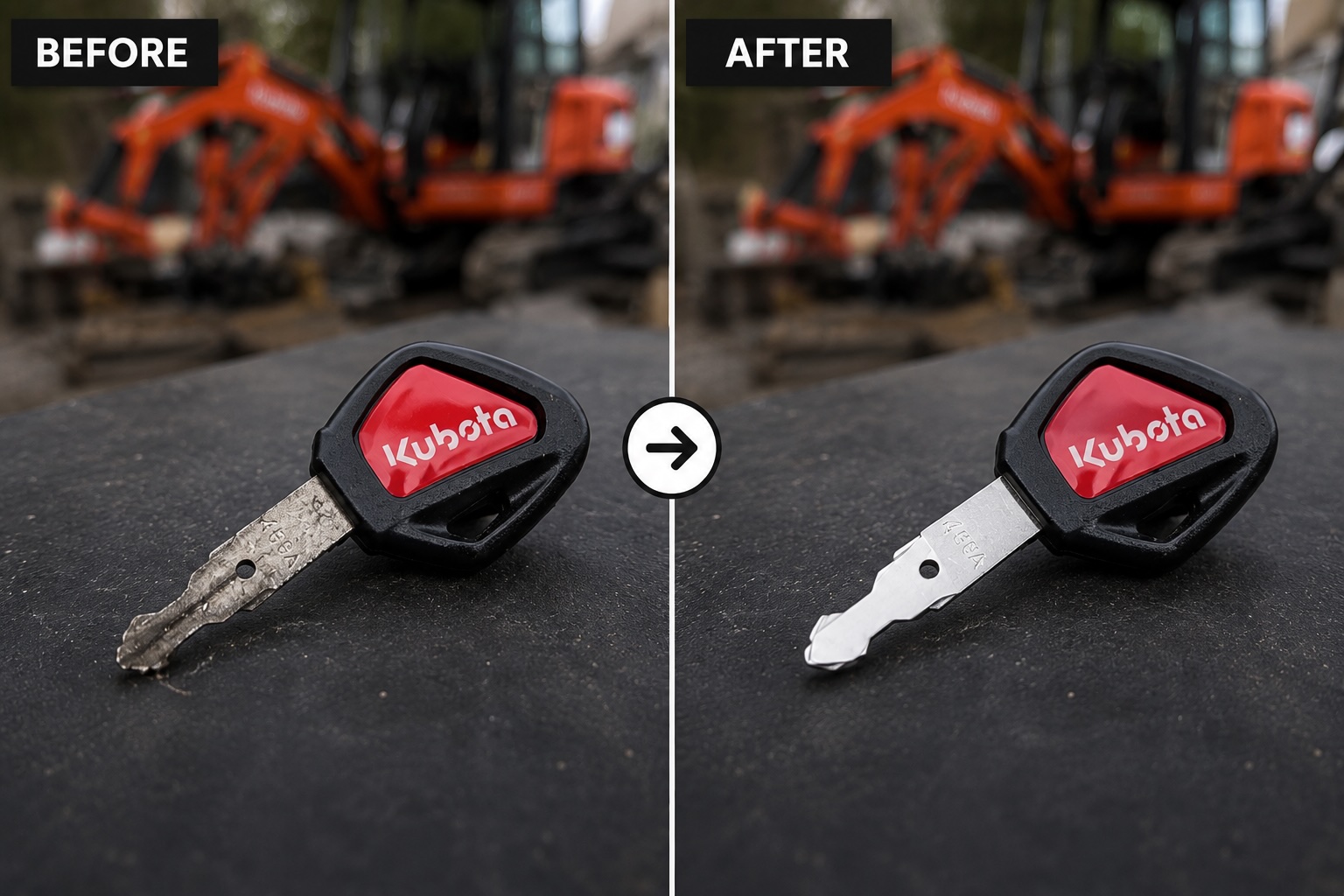
Kubota's key system, particularly on the KX and U series, is robust enough that a stolen blank key cannot be programmed without the correct equipment. The ICO and Terracotta systems add another layer of protection by using rolling codes that change each time the key is used. So the risk of someone cloning your key from a distance is very low. The main threat is physical theft of the key itself, which you can mitigate with a simple lockbox or a security cabinet on site.
Final Thoughts
If you run a Kubota mini digger in the UK, whether it is a U10 for groundwork or a KX for heavier excavation, a spare key is not a luxury. It is a basic tool of the trade. The cost of a replacement key from a specialist like Kubota Keys is small compared to the cost of a day without your machine. And the peace of mind that comes from knowing you have a backup is worth more than the price of the key itself. Next time you order a replacement key, consider ordering two. Keep one as a working key and the other as a spare. That way, you are covered for the inevitable moment when a key slips out of a pocket or gets left in a jacket that goes home at the end of the day.